
Equestrian Properties
Horse farms.
Built for the discipline.
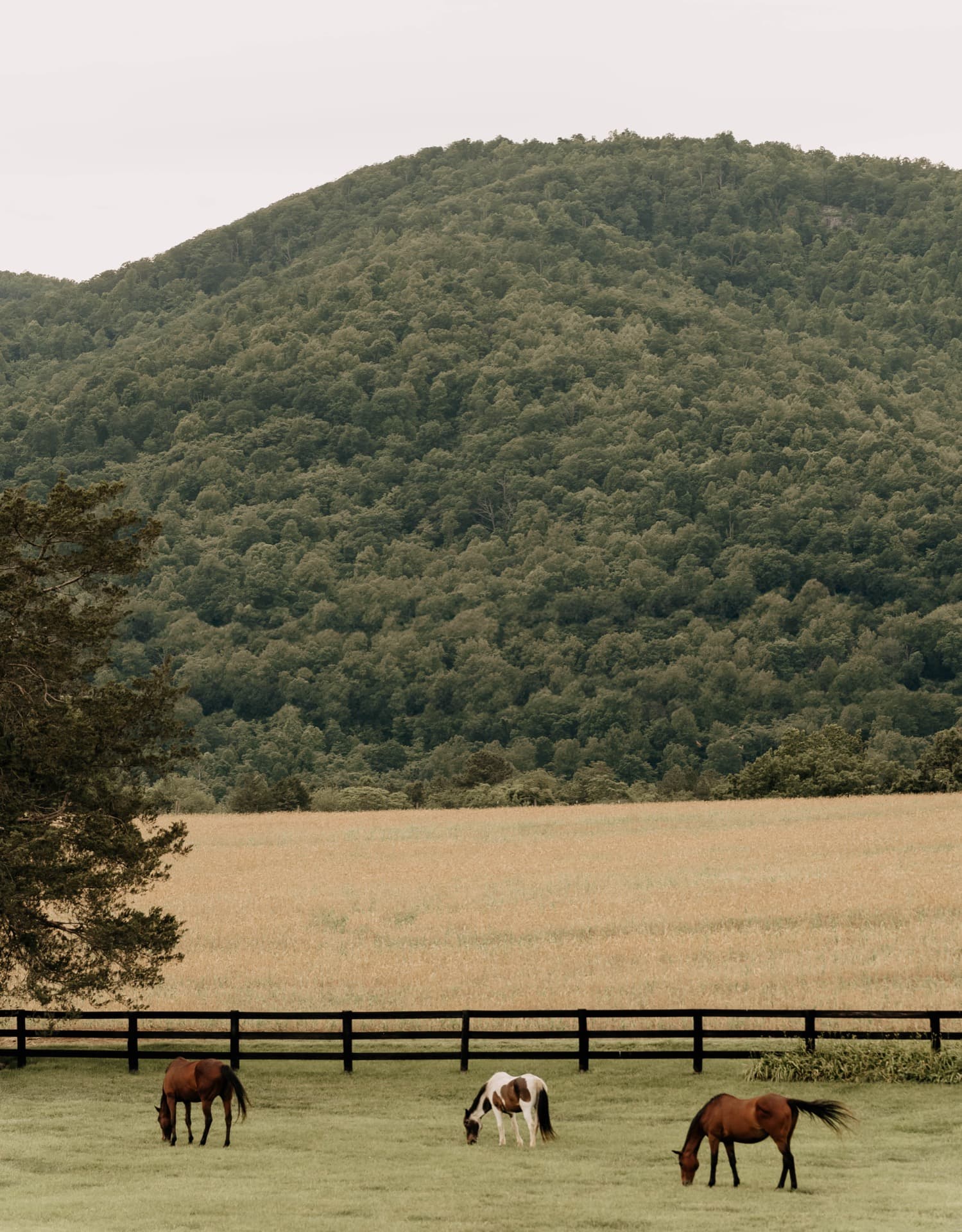
Conor Murray represents buyers and sellers of equestrian properties across the Virginia Piedmont — hunt-country estates near Keswick and Farmington Hunt Club, training facilities for jumpers and eventers, and small private horse farms throughout Western Albemarle.
Equestrian Properties
Equestrian properties and horse farms for sale in Virginia
Virginia's equestrian real estate market is regional. Hunt-country properties anchored to Keswick Hunt Club and Farmington Hunt Club command a meaningful premium and trade through a small network of agents who know the riders, the foxhounds, and the families. Outside of hunt country, the market is broader — Albemarle, Madison, and Orange counties all offer strong equestrian land with mild winters and forgiving terrain. See our local guides for Keswick and Farmington for the neighborhood-level read.
Equestrian buyers fall into three broad camps. Hunt-country buyers are looking for proximity to Keswick or Farmington Hunt Club country — typically large pastures, board fencing, access to ride-out, and a home that fits the riding lifestyle. Discipline buyers (jumpers, eventers, dressage) want purpose-built rings, barns with the right stall configuration, washbays, hot/cold water, and often an indoor arena. Pleasure / boarding buyers are typically on smaller acreage with simpler improvements and may run a small boarding operation as an offset to ownership costs.
Sellers of equestrian properties have a longer-than-average marketing window — riders are particular, the buyer pool is small relative to total real-estate demand, and a 12-stall barn with the wrong roof pitch can sit for a year. Professional photography of the equestrian infrastructure (not just the house) is non-negotiable. So is full disclosure on water (yield, dry-year history, infrastructure age) and easement status (some easements limit the type or scale of livestock operations).
Buyer Diligence
What to check before you sign.
Stalls + barn config
Number of stalls, dimensions, ventilation, ceiling height, aisle width, hot water, washbay, tack room, hay loft access.
Footing + arenas
Indoor / outdoor ring dimensions, footing material + age, drainage. Round pen. Trail access.
Fencing
Board, vinyl, or wire. Top-rail height. Recent posts/paint. Cross-fencing layout.
Pasture rotation
Number of paddocks, water in each, run-in sheds, hay-storage proximity, gates + lanes.
Water + waste
Auto-waterers in barn and paddocks. Manure-management plan. Septic capacity if grooms-quarters are present.
Ride-out access
Public trails, ride-out easements onto neighbors' land, proximity to hunt country.
Hunt club / discipline access
Membership requirements at Keswick Hunt Club, Farmington Hunt Club, or local training venues.
Bonus: helipad, guest cottage, trainer's apartment
Common at the upper end of the market — confirm zoning + use restrictions.
Common Features
What we see most often.
- ·Center-aisle barn with 6-12 stalls
- ·Outdoor sand or fiber ring
- ·Indoor arena (high-end properties)
- ·Board or post-and-rail fencing
- ·Multiple paddocks with shelters
- ·Hay barn / equipment shed separate from horse barn
- ·Year-round water in every paddock
Primary Geography
Where this category lives.
- ·Keswick / Cobham hunt country
- ·Farmington Hunt Club country
- ·Free Union
- ·Madison County
- ·Greene County
- ·Orange County hunt country
FAQ
Frequently asked — equestrian properties
The Virginia Piedmont — Albemarle, Madison, Orange, Greene, and the western edge of Loudoun and Fauquier — is the strongest equestrian real-estate market in the state, anchored by an established hunt-club culture and proximity to the Middleburg / Upperville training and competition scene. Within central Virginia, the Keswick and Farmington hunt-country areas are the most established for traditional equestrian estates; Madison and Orange offer larger parcels at lower price points.
Most active horse-farm transactions in the Charlottesville area fall between $1.5M and $5M, depending on acreage, improvements, and proximity to hunt country. Smaller hobby farms with basic infrastructure can start under $1M. Trophy estate farms with indoor arenas, grooms-quarters, and major land ($300+ acres) routinely exceed $6M-$10M. The market is regional — pricing on a Free Union farm with the same square footage can differ meaningfully from a comparable Madison County property.
Longer than a comparable residential property. Typical days on market for $1M+ Virginia horse farms tracks 90-180+ days. The pool of qualified buyers is small, the diligence is intricate (barn condition, footing, water, easements), and a mismatched property — wrong stall count, wrong arena footing, wrong fencing — can sit for a year. Professional photography, full disclosure, and pricing realism are essential.
No. Indoor arenas are common at the upper end of the market ($3M+) and on dedicated training operations, but most pleasure-riding and hunt-country farms have only outdoor rings. Adding an indoor arena post-acquisition is possible on most parcels (subject to easement restrictions and county permitting), but costs typically run $300K-$800K+ depending on size, footing, and amenities.
Hunt-country properties are in specific geographies where Virginia's recognized foxhunts ride — for the Charlottesville area, that means primarily Keswick Hunt Club country and Farmington Hunt Club country. These properties typically have ride-out access onto neighboring land, board fencing, and a level of social and architectural tradition that buyers in this niche value. They command a premium over comparable equestrian acreage outside hunt country.
Explore by Category
Other country property categories.
Considering a property in this category?
Pre-market and off-market work is most of what we do. Start with a private conversation.